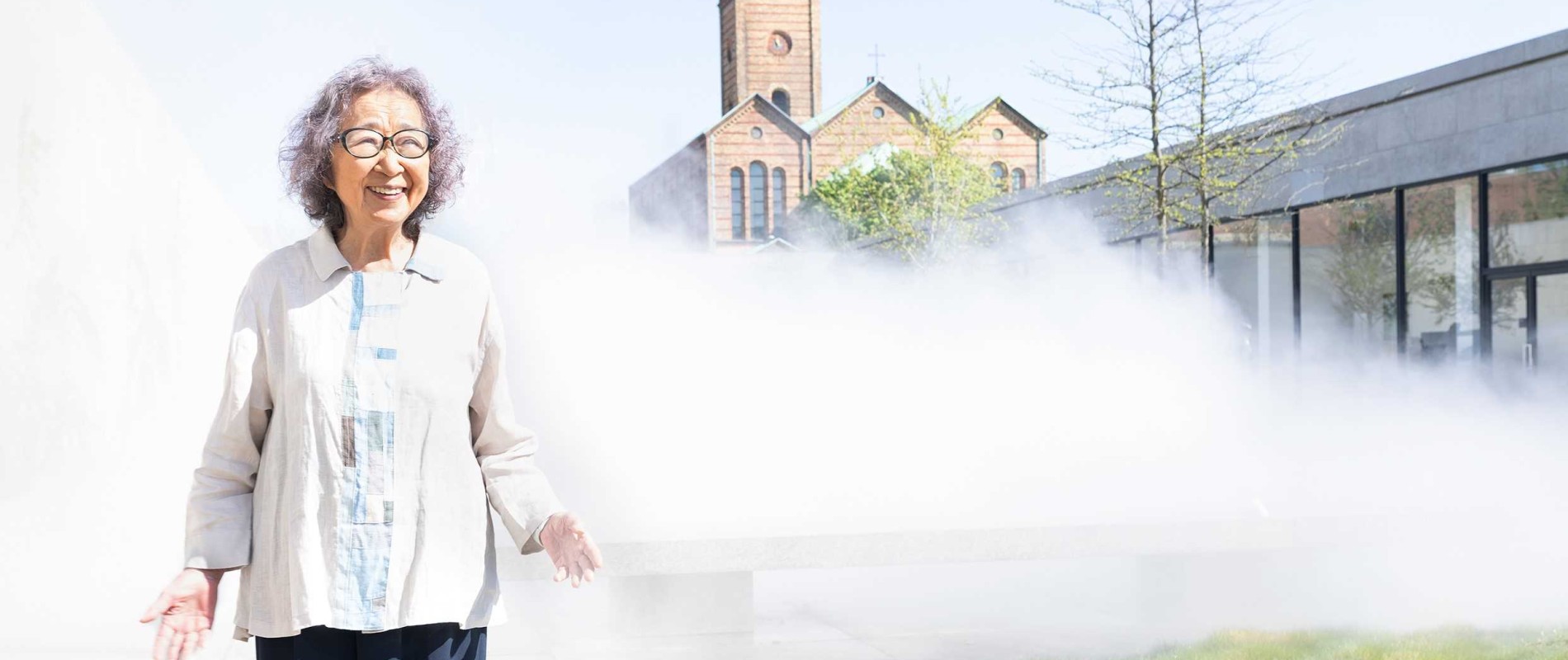
A major installation unfolding in multiple temporary configurations, with artworks cyclically emerging and eclipsing
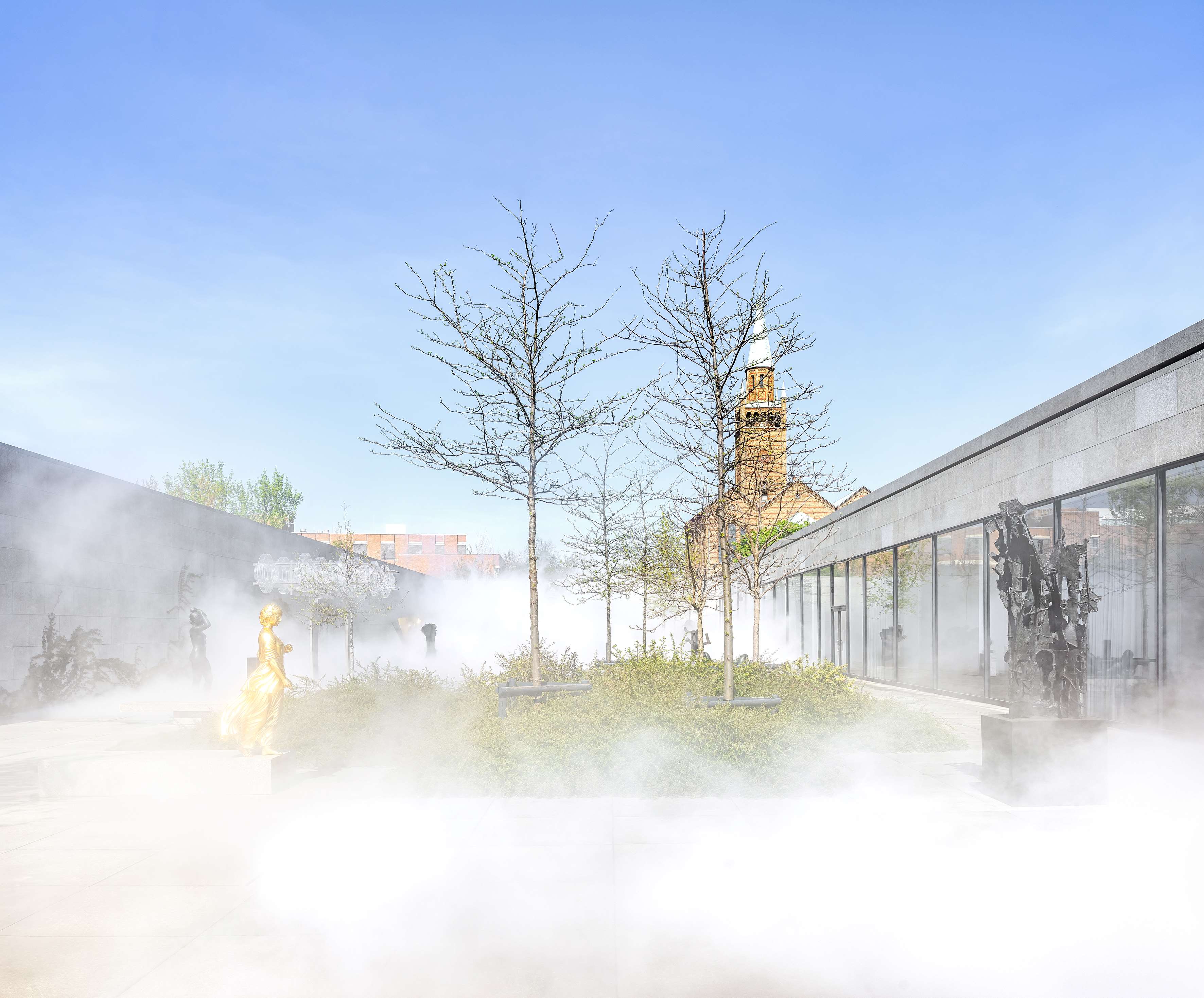
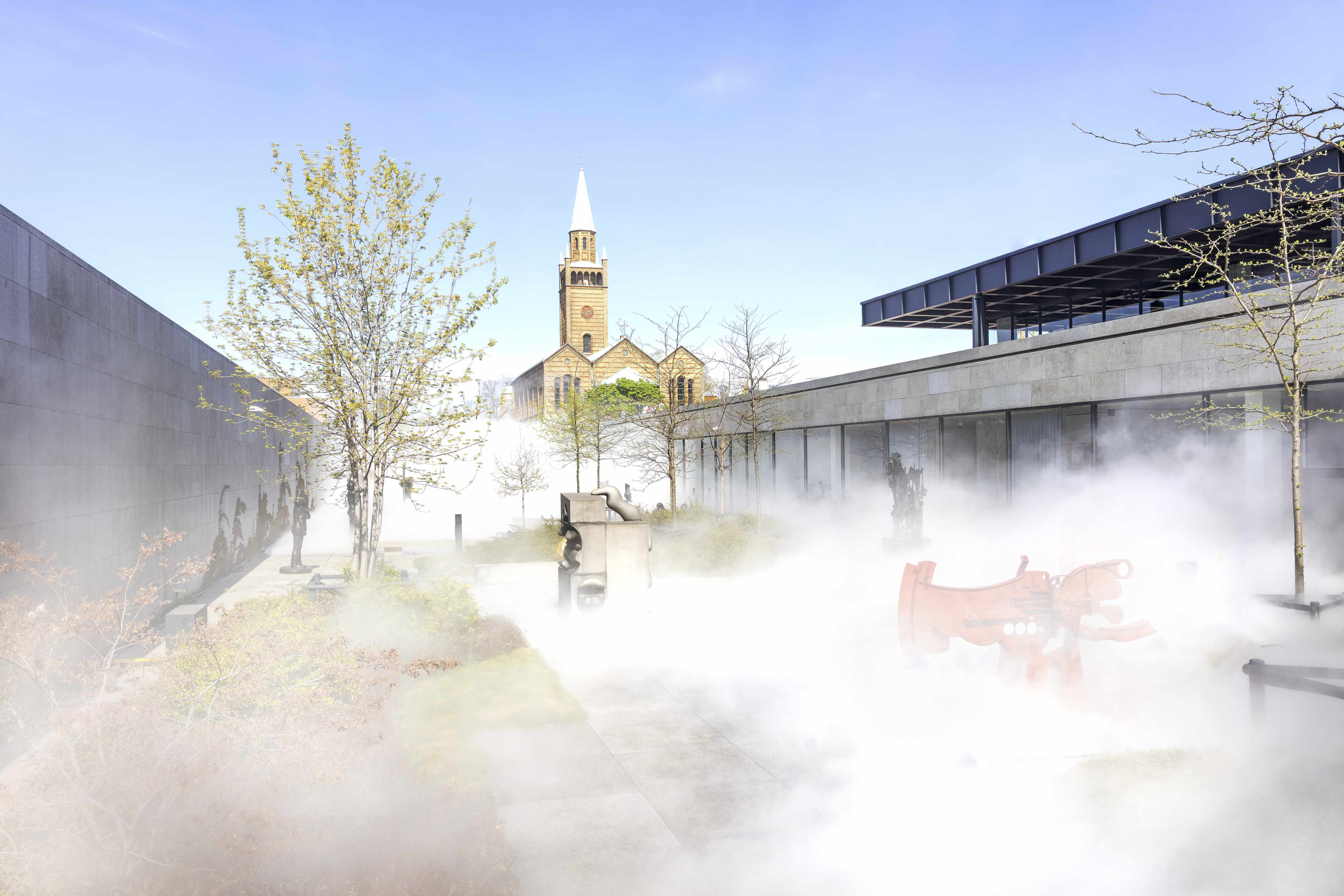
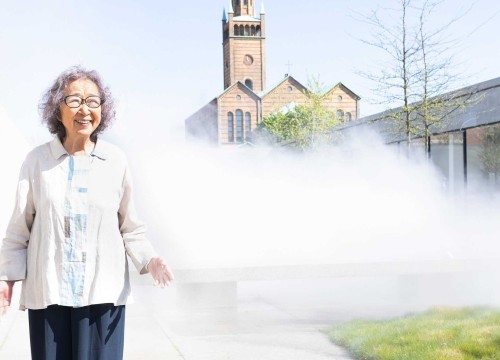
As I archive the press materials from Fujiko Nakaya’s latest exhibition, I pause on the practical information section of the Neue Nationalgalerie’s website. Among the warnings directed at visitors, one sentence stands out: “Enter the sculpture garden at your own risk.” A sign with a Dantean aftertaste conveys a state of alarm, quite atypical for an audience seeking tranquil gratification. What is there to fear, then, when facing the Japanese artist’s works? How can tiny water particles cause harm? Because that is exactly what this is: a physical phenomenon better known as fog. A fog that envelops spaces, plants, benches, buildings, people, and artworks. It redefines perceptions, obscures reference points, obliterates, isolates, disorients, and deceives the mind - for ten minutes, before vanishing.
A visit that obscures, isolates, disorients, and deceives the mind between appearances and disappearances
“If we want things to stay as they are, things will have to change”, Tancredi claims in The Leopard. Only through a temporary loss of form does architecture reveal its geometric order with renewed clarity. Born in 1933 in Sapporo to the snow crystal expert Ukichiro Nakaya, the sculptor of clouds would build a career that has become one of the most influential within contemporary environmental art. From her time in the 1960s as a member of the New York collective Experiments in Art and Technology (E.A.T.), to solo exhibitions at the Guggenheim, the Haus der Kunst, the Fondation Beyeler, and the Luma Foundation, all the way to international accolades, including the prestigious Praemium Imperiale and the Order of the Rising Sun. Thus, the major installation in Berlin unfolds in multiple temporary configurations. From a scientific standpoint, this is not a theatrical special effect, but real, pure fog - the result of research developed alongside engineers from the American company Cloudbuster.
Each bank generated along the perimeter reshuffles the visual landscape. Pieces from the permanent collection by Henri Laurens, Wolfgang Mattheuer, and Alicja Kwade cyclically emerge and eclipse. Viewed from inside the museum, the operation takes on the character of an immense moving painting, an alternation of appearances and disappearances, echoing a theme dear to Japanese aesthetics: transience. The fluid follows the most favorable gradient, bypasses obstacles, expands, dissolves, and reappears elsewhere. A substance that cannot be contained. Perhaps this is the greatest danger of the exhibition: its message of freedom. Water and air do not oppose change; they do not fight it, nor do they endure it. They move through it. Because of this, they evade any attempt at capture and continue to transform, without ever denying their own nature.
Enter the sculpture garden at your own risk: the museum's warning to visitors



![FRIDA KAHLO - Untitled [Self-portrait with thorn necklace and hummingbird] 1940, Nickolas Muray, Collection of Mexican Art](/sites/default/files/styles/latest_articles/public/articoli/what/mythical-frida-london-major-kahlo-exhibition-tate-modern/mythical-frida-london-major-kahlo-exhibition-tate-modern.jpg?itok=lTX1uQ5J "FRIDA KAHLO - Untitled [Self-portrait with thorn necklace and hummingbird] 1940, Nickolas Muray, Collection of Mexican Art")